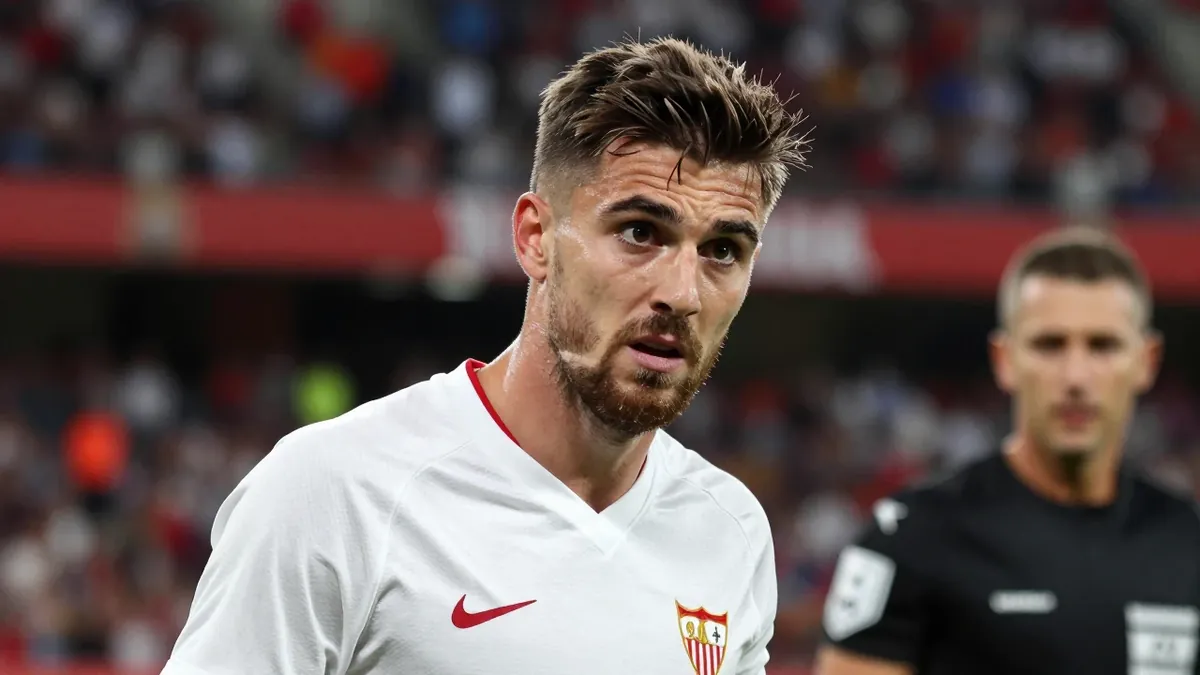
Sevilla FC displayed competitive grit and found themselves at the centre of another refereeing controversy during their 1-1 draw with Espanyol at the RCDE Stadium. According to Marca's analysis, the team managed by Luis García Plaza showed tremendous resilience after playing nearly half an hour with ten men following Arouna Sangante's red card.
The Andalusian side currently sits seventh in La Liga with 7 points, from two wins, a draw, and a loss in the first four matchdays. Their next challenge is a home fixture against Valencia at the Ramón Sánchez-Pizjuán on September 11, a key match to consolidate their position in the upper half of the standings.
How did Sevilla handle the sending off?
The dismissal of Arouna Sangante in the 55th minute, as reported by Marca, tested the team's maturity. Despite being a man down, Sevilla not only held firm but even took the lead through a goal from debutant Lucas Stassin. Luis García Plaza had set up a 4-2-3-1 with changes including Kochorashvili and Ejuke, who were coming off strong performances against Atlético Madrid.
The team showed notable concentration in the minutes following the red card. The match report states they gradually took control of possession and competed with know-how, a clear contrast to the fragile image of previous seasons. This defensive solidity has helped the team achieve a record of 7 goals scored and 6 conceded, a more balanced tally than in recent campaigns.
What caused the bench's outrage?
The outrage on the Sevilla bench, documented by Marca, was immediate. Referee Sesma Espinosa interpreted a challenge by Sangante on Roberto Fernández as a denial of a clear goalscoring opportunity and showed a straight red. Replays indicated the defender made contact with the ball first, but from the VOR room, Trujillo Suárez decided not to advise the on-field referee to review the incident.
This incomprehensible decision earned Luis García Plaza a yellow card for his protests. The manager was already frustrated by a penalty not given for a foul on Kike Salas against Atlético the previous week. "It's a penalty. The other day they made a big deal about the sending off, which perhaps wasn't one," García Plaza stated according to the publication, hoping the refereeing committee would comment on the new controversial incident.
Why are the goals being shared around?
A positive statistic from the season's start is the diversity in goalscorers. ABC Deportes highlighted that the seven goals scored by Sevilla in this 2026-27 League campaign have come from seven different players: Peque, Isaac, Oso, Ejuke, Miguel Sierra, Guridi, and Stassin. This points to a collective involvement in the attacking phase.
However, the outlet also notes the need for out-and-out forwards, like Ure, to start adding to their tallies. The striker finished exhausted in Cornellá after a match of intense work and pressure, and seems to perform better with another striker alongside him. This variety in goalscoring is an asset, but the team needs more accuracy from its main references in front of goal to maintain its positive rhythm, which includes a recent form of DLWW.
What does the earned point signify?
The last-gasp draw, with Marcos Fernández's stoppage-time equalizer for Espanyol, left a bittersweet taste but confirms an evolution. Sevilla has taken 7 points from a possible 12 and sits 5 points behind the leaders, Barcelona. The image of a tough team that never switches off, even when a man down, represents significant progress.
The individual analysis by Mundo Deportivo on Espanyol underlined the difficulty of the match, with players like Expósito being key for the home side. For Sevilla, the focus now shifts to preparing for the clash against Valencia, who visit the Sánchez-Pizjuán sitting in 20th place in the table. The squad, which you can review in detail on our squad page, will be looking to take three points at home on September 11.